Menu
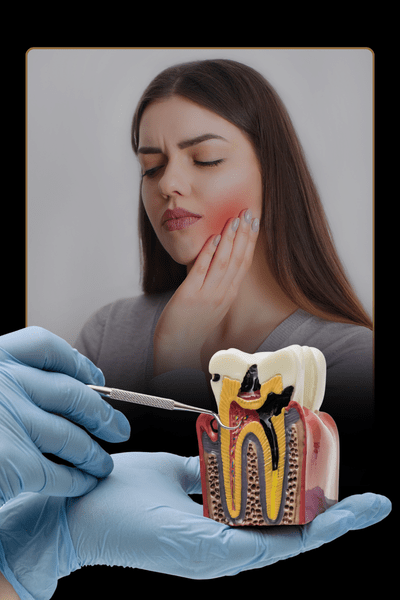
Painless Root Canal Treatment in Rajajinagar has transformed the way patients experience dental care, making it possible to save damaged teeth comfortably and effectively with modern dental technology. If the thought of a root canal makes you want to cancel your appointment, this guide is for you.
Pain is the biggest reason patients in Bangalore delay root canal treatment. That delay is also the reason a simple procedure often turns into a complicated one. The infection does not wait.
Here is the honest truth: root canal treatment today is not the procedure people fear. Modern techniques, precise anaesthesia, and digital imaging have made it one of the most predictable and comfortable dental procedures available. Most patients in Rajajinagar and Mahalakshmi Layout leave the clinic surprised by how straightforward it was.
This guide walks you through the full experience – what happens at each stage, what you will feel, how long it takes, and what recovery looks like.
No. Root canal treatment performed with modern local anaesthesia is virtually painless. The tooth and surrounding tissue are completely numb before treatment begins. What most patients feel is mild pressure during the procedure – nothing more.
The pain people associate with root canal treatment comes from the infection itself, not the treatment. A throbbing toothache at 2am is the infection. The procedure that removes it brings relief, not more pain.
The other source of fear is outdated stories. Root canal techniques 20 to 30 years ago were slower and less precise. Today, with rotary instruments, CBCT scanning, and advanced anaesthesia, the experience is entirely different.
If your tooth has been aching for days, understanding why that pain comes and goes can help you decide whether to act sooner rather than later.
Several advances in dental technology work together to make the procedure comfortable from start to finish:
Together, these tools make the procedure faster, more accurate, and more comfortable than it has ever been.
Your dentist takes digital X-rays and, where the infection is complex, a 3D CBCT scan. This gives a complete picture of the canal anatomy, infection extent, and surrounding bone before any treatment begins.
What you feel: Nothing. The imaging is quick and non-invasive.
Topical gel is applied to the gum first. Local anaesthetic is then administered around the tooth. Your dentist will wait and confirm the area is fully numb before proceeding. If you feel anything during treatment, additional anaesthetic is given immediately.
What you feel: A brief pinch as the injection is placed, then progressive numbness over two to three minutes.
A small access opening is made through the top of the tooth. Using rotary instruments, the infected pulp tissue and bacteria are removed from all canals. Antibacterial irrigating solution flushes the canals clean throughout this stage.
What you feel: Pressure and vibration from the instruments. No pain. The tooth is fully numb.
Once the canals are clean and shaped, they are filled with gutta-percha – a biocompatible rubber material – and sealed to prevent reinfection. A temporary or permanent filling closes the access point.
What you feel: Nothing. This stage is entirely comfortable.
A root canal-treated tooth is more brittle than a living tooth because the pulp has been removed. A dental crown is placed at a follow-up appointment to protect the tooth from fracture and restore full chewing function.
If you are wondering what crowns cost and what materials are available, the dental crown cost guide for Bangalore covers all the options in detail.
Duration varies based on which tooth needs treatment and how complex the infection is:
Tooth Type | Time Per Visit | Sittings Needed |
Front tooth (1 canal) | 45 to 60 minutes | 1 sitting |
Premolar (2 canals) | 60 to 75 minutes | 1 to 2 sittings |
Molar (3 to 4 canals) | 75 to 90 minutes | 2 to 3 sittings |
Many straightforward cases – particularly on front teeth – are completed in a single sitting. More advanced infections may need a second appointment to allow healing before the final seal is placed.
During treatment:
After treatment (first 48 to 72 hours):
Standard over-the-counter pain relief is sufficient for most patients. Severe or worsening pain after three days, visible swelling, or a persistent bad taste should be reported to your dentist promptly.
Root canal treatment becomes necessary when the soft tissue inside a tooth – the pulp – becomes infected or irreversibly inflamed. This happens most commonly due to:
Patients across Rajajinagar, Mahalakshmi Layout, Vijayanagar, and surrounding areas often search for trusted local care when they notice these symptoms:
If you are unsure whether your symptoms indicate a root canal, this guide on signs that indicate you need a root canal explains each symptom in detail.
A dental infection does not stabilise on its own. Without treatment, the pulp dies, the infection spreads to the surrounding bone, and the tooth may become non-restorable.
Patients who delay treatment often find that what could have been a straightforward one-sitting procedure has become a multi-visit process involving bone involvement or abscess drainage.
The cost increases. The complexity increases. In some cases, the tooth cannot be saved at all – which means an extraction followed by a replacement option such as a dental implant or bridge.
A detailed look at what happens when you delay root canal treatment shows exactly how quickly a manageable situation can escalate.
For patients across Rajajinagar, Mahalakshmi Layout, and northwest Bangalore, DeVita Dental and Maxillo Facial Care provides root canal treatment that prioritises accuracy, patient comfort, and long-term results.
Confirmed pain-free treatment: DeVita confirms complete numbness before any procedure begins. Every patient’s comfort is monitored throughout – not assumed. Additional anaesthetic is given immediately if needed at any stage.
Digital diagnosis as standard: Every root canal case begins with digital X-rays and CBCT 3D scanning where needed. This ensures all canals are identified and treated accurately, with no guesswork involved.
Rotary endodontics on every case: Motorised rotary instruments are used as the default – not an upgrade. They clean faster and more thoroughly than manual files, resulting in less post-procedure soreness and more predictable outcomes.
Single-sitting treatment where possible: Many straightforward cases at DeVita are completed in one visit, reducing the total number of appointments for the patient.
Complex cases managed in-house: Re-treatments, calcified canals, and cases with curved root anatomy are handled by experienced specialists at the clinic – not sent elsewhere.
Book a consultation at DeVita Dental or visit the root canal treatment service page for full treatment details.
Looking for advanced dental care near Mahalakshmi Metro Station, Rajajinagar, Bangalore? DeVita Dental & Maxillo Facial Care offers specialized treatments including dental implants, clear aligners, root canal treatment, cosmetic dentistry, and maxillofacial surgery.
Our clinic combines advanced dental technology with personalized treatment planning to deliver comfortable and precision-driven care.
 Address:
1st Floor, 17/A, 20th Main Road, Next to Mahalakshmi Metro Station, 1st R Block, Chord Road, Rajajinagar, Bengaluru – 560010
 Call / WhatsApp: +91 91106 55755
 Read Patient Reviews & Get Directions: Google Business Profile
Follow Us: Instagram
Yes. With advanced local anaesthesia and rotary endodontic instruments, modern root canal treatment is performed with the tooth completely numb. Patients experience pressure and vibration during the procedure but not pain. Post-treatment soreness for one to two days is normal and manageable with standard medication.
A good clinic applies topical gel before the anaesthetic injection and confirms full numbness before proceeding. Rotary instruments reduce treatment time and mechanical stress on the tooth. Digital imaging ensures nothing is missed. The patient is encouraged to signal at any point if they feel discomfort.
Some mild tenderness for two to three days after treatment is normal. This is tissue inflammation settling, not infection returning. Pain that worsens after day three, or that returns weeks or months later, may indicate incomplete cleaning or reinfection and should be assessed by your dentist promptly.
Front teeth with a single canal are often completed in one sitting of 45 to 60 minutes. Molars with multiple canals may need two to three visits depending on infection severity. Crown placement is a separate appointment after healing is confirmed, typically two to four weeks later.
Most patients return to work and normal activities the same day or the following morning. Avoid chewing on the treated side until the permanent crown is placed. Stick to soft foods for the first day. Avoid smoking during the healing period as it slows tissue recovery and increases infection risk.
Root canal treatment in Bangalore ranges from Rs. 3,000 to Rs. 12,000 depending on which tooth is being treated and the complexity of the infection. A protective crown placed after treatment is an additional cost. Compared to the long-term cost of extraction and tooth replacement, root canal treatment is almost always the more economical choice.
Root canal treatment in Bangalore is not the procedure most patients imagine. It is routine, well-controlled, and – when done at the right clinic with the right technology – genuinely comfortable.
The only thing that makes root canal treatment more difficult is waiting. Early treatment means less infection, fewer visits, lower cost, and a far more predictable outcome.
If you have been experiencing tooth pain or sensitivity and are not sure what is causing it, a consultation is the right first step. You get a diagnosis, a clear treatment plan, and an honest cost estimate – before committing to anything.
For a complete overview of the procedure, causes, and recovery, the complete guide to root canal treatment covers everything you need to make an informed decision.
This content is for educational purposes only. Please consult a qualified dental professional for personalised advice.