Menu
Root Canal Treatment in Bangalore is a highly effective dental procedure designed to remove infection, relieve pain, and preserve your natural tooth for long-term oral health. If your dentist has recommended a root canal, your first reaction was probably concern. For decades, root canal treatment has had an unfair reputation – feared more than almost any other dental procedure.
Here is the truth: modern root canal treatment is nothing like the experience people imagine. For most patients, it is no more uncomfortable than having a routine filling placed. What it does, however, is far more significant – it saves your natural tooth, eliminates a painful infection, and prevents complications that could affect your overall health.
This guide covers everything you need to know about root canal treatment – what it is, why it is needed, what the procedure involves, what it costs in Bangalore, and what recovery looks like. Whether you have been advised to have one or are simply researching your symptoms, you will find clear, honest answers here.
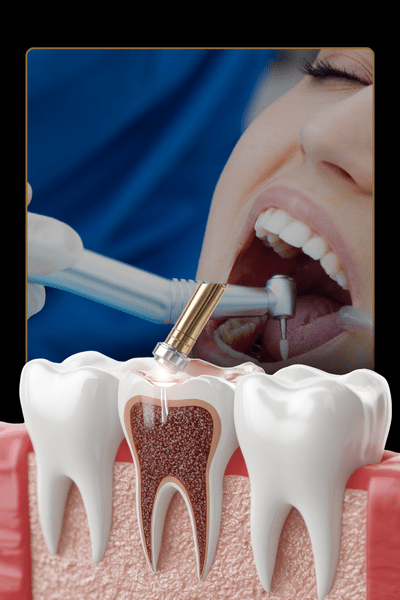
Root canal treatment (RCT) is a dental procedure that removes infected or damaged tissue from inside a tooth – including the pulp, nerves, and bacteria – then cleans, fills, and seals the tooth to save it from extraction.
The goal is straightforward: eliminate the source of infection, relieve pain, and preserve your natural tooth so it can continue to function normally for years to come.
The procedure gets its name from the natural canals inside the root of every tooth. These canals house the dental pulp – the soft tissue containing nerves and blood vessels. When this pulp becomes infected or severely inflamed, root canal treatment is the solution.
The pulp inside your tooth is protected by hard enamel and dentine. But when that protection is compromised, bacteria can reach the pulp and cause serious infection. The most common reasons this happens:
Deep tooth decay When a cavity is left untreated, it progresses deeper into the tooth over time. Once it reaches the pulp, infection sets in quickly.
Cracked or fractured tooth A crack in the tooth – even a hairline fracture – can allow bacteria to enter the pulp. This is common after accidents, hard food biting, or teeth grinding.
Repeated dental procedures A tooth that has undergone multiple fillings or restorations can become irritated and inflamed over time, eventually requiring root canal treatment.
Trauma or injury A knocked or jarred tooth can damage the pulp internally without any visible crack or cavity. The pulp can die slowly after trauma, leading to infection months or years later.
Severe gum disease In advanced cases, periodontal infection can travel along the tooth root and affect the pulp from below.
Left untreated, a pulp infection does not stay localised. It can spread to surrounding bone, neighbouring teeth, and – in serious cases – to other parts of the body. This is why timely treatment matters. Read more about what happens when you wait: Is It Safe to Delay a Root Canal Treatment?
Your body gives clear warning signals when pulp infection is developing. Watch for these symptoms:
Not all infected teeth cause obvious pain. Some cases are detected only on X-ray during routine check-ups – another reason regular dental visits matter. If you are experiencing any of these symptoms, see a dentist promptly rather than waiting for the pain to worsen.
For a deeper look at each symptom and how dentists diagnose the need for treatment, read: When Is Root Canal Treatment Necessary? Signs, Diagnosis & Modern Care
Root canal treatment is a carefully controlled process carried out over one to three visits, depending on the complexity of the infection.
Your dentist takes detailed X-rays – and often a CBCT (3D) scan for complex cases – to assess the extent of infection, the shape of the root canals, and the surrounding bone. This imaging guides the entire treatment.
The tooth and surrounding area are numbed thoroughly with local anaesthetic. This is the step most patients dread – and the one that surprises them most. The numbing injection is the extent of any discomfort. Once numb, you should feel nothing during the procedure itself.
A thin rubber sheet called a dental dam is placed around the tooth. This keeps the area clean, dry, and free from saliva and bacteria throughout the procedure.
A small opening is made through the top of the tooth to access the pulp chamber. Using very fine instruments – including rotary files – the infected pulp tissue, bacteria, and debris are carefully removed from all canals.
The canals are thoroughly cleaned, shaped, and flushed with antibacterial irrigating solutions to eliminate any remaining bacteria and prepare the space for filling.
The cleaned canals are filled with a biocompatible material called gutta-percha and sealed to prevent reinfection. A temporary or permanent filling is placed in the access opening.
In most cases, a root canal-treated tooth needs a dental crown to protect it from fracture, since the tooth becomes more brittle after the pulp is removed. The crown restores full strength and appearance. This is typically completed at a separate appointment once healing is confirmed.
For a detailed breakdown of the procedure, read: Dental Implants Complete Guide.
This is the most common concern – and the most consistently misunderstood.
The short answer: no. Root canal treatment today is not a painful procedure.
The procedure is performed under local anaesthesia, which fully numbs the tooth and surrounding tissue. You may feel pressure or movement during treatment, but pain is not expected. The vast majority of patients are surprised by how manageable the experience is.
The discomfort associated with root canal treatment in older accounts came primarily from two sources: inadequate anaesthesia techniques of the past, and the pain of the infection itself – not the treatment. Modern anaesthesia, rotary instruments, and digital imaging have transformed the experience entirely.
Some mild soreness or sensitivity in the days following treatment is normal as the surrounding tissue settles. This is typically managed well with standard over-the-counter pain relief.
Patients searching for painless root canal treatment in Bangalore will find that this is now the standard of care at specialist clinics – not a premium add-on.
The duration depends on which tooth is being treated and how complex the infection is:
Tooth Type | Typical Duration | Visits Required |
Front teeth (1 canal) | 45–60 minutes | 1–2 visits |
Premolars (2 canals) | 60–75 minutes | 1–2 visits |
Molars (3–4 canals) | 75–90 minutes | 2–3 visits |
Complex / re-treatment cases | 90+ minutes | 2–3 visits |
Many straightforward cases can be completed in a single sitting. More complex infections or teeth with curved or multiple canals may require an additional visit to ensure complete cleaning and healing before the final seal is placed.
The crown appointment, once healing is confirmed, adds one further visit.
Root canal treatment cost in Bangalore typically ranges from ₹1,500 to ₹12,000 per tooth, depending on several factors.
Approximate cost guide:
Procedure | Estimated Cost (₹) |
RCT – Front tooth (single canal) | ₹3,000 – ₹5,000 |
RCT – Premolar (two canals) | ₹4,000 – ₹7,000 |
RCT – Molar (three to four canals) | ₹6,000 – ₹12,000 |
Zirconia crown (post-RCT) | ₹8,000 – ₹15,000 |
Investing in root canal treatment is almost always more cost-effective than extraction followed by tooth replacement – especially when you factor in the long-term cost of implants or bridges.
Root canal treatment often gets a bad reputation, but its benefits are significant and well-documented:
Saves your natural tooth Nothing functions or feels as good as a natural tooth. Root canal treatment allows you to keep yours rather than having it extracted and replaced.
Eliminates infection and pain The procedure removes the source of infection entirely. Most patients feel immediate relief from the throbbing pain that brought them in.
Prevents infection from spreading A dental abscess left untreated can spread to the jaw, neck, and in rare cases, become a systemic health risk. Root canal treatment stops this progression.
Restores normal function After treatment and crown placement, you can chew, bite, and speak normally. No dietary restrictions, no discomfort.
Cost-effective long term Compared to extraction followed by an implant or bridge, root canal treatment is significantly more affordable – and preserves the natural tooth structure.
Aesthetically seamless A well-placed crown after root canal treatment is indistinguishable from a natural tooth.
Root canal treatment has a very high success rate – approximately 85–97% over 10 years according to clinical literature. However, as with any procedure, a small risk of complications exists:
The overwhelming majority of root canal treatments are uneventful. Choosing an experienced dentist with proper imaging equipment is the most important factor in minimising any risk.
Recovery after root canal treatment is typically straightforward.
What to expect in the first 48–72 hours:
Aftercare guidelines:
Most patients return to normal activity the same day or the following morning. There is no extended recovery period required.
When a tooth is severely infected, some patients ask: why not just remove it?
It is a fair question. Here is an honest comparison:
Factor | Root Canal Treatment | Tooth Extraction |
Natural tooth preserved | ✅ Yes | ❌ No |
Bone loss over time | ❌ No (bone maintained) | ✅ Yes (bone resorption begins) |
Chewing function | ✅ Fully restored | ⚠️ Reduced until replaced |
Cost (immediate) | Moderate | Lower |
Cost (long-term with replacement) | Lower overall | Higher (implant or bridge needed) |
Adjacent teeth affected | ❌ No | ⚠️ Can shift into gap |
Procedure complexity | Moderate | Simple to complex |
In most cases, saving a natural tooth through root canal treatment is the better long-term decision – both clinically and financially. Extraction should generally be considered only when a tooth is non-restorable.
For patients searching for root canal treatment in Rajajinagar or the best dental clinic in Mahalakshmi Layout, DeVita Dental and Maxillo Facial Care provides specialist endodontic care built around precision, patient comfort, and clinical outcomes.
Our clinic combines advanced dental technology with personalized treatment planning to deliver comfortable and precision-driven care.
 Address:
1st Floor, 17/A, 20th Main Road, Next to Mahalakshmi Metro Station, 1st R Block, Chord Road, Rajajinagar, Bengaluru – 560010
 Call / WhatsApp: +91 91106 55755
 Read Patient Reviews & Get Directions: Google Business Profile
Follow Us: Instagram
Painless procedure as standard DeVita uses advanced local anaesthesia protocols to ensure complete numbness before and throughout the procedure. Patients consistently report that the experience is far more comfortable than they anticipated. Painless root canal treatment is not a marketing claim here – it is the clinical standard.
Digital diagnosis and imaging Every root canal case begins with detailed digital X-rays and, where needed, a CBCT 3D scan. This allows the treating dentist to see the exact number, shape, and condition of all canals before beginning – reducing surprises and improving accuracy.
Rotary endodontics DeVita uses motorised rotary file systems rather than manual instrumentation. This approach is faster, more thorough, and places less stress on both the tooth structure and the patient.
Single-sitting RCT for eligible cases Where the infection allows, DeVita offers single-sitting root canal treatment – completing the entire procedure in one visit rather than spreading it over multiple appointments.
Specialist-led treatment Complex cases – including re-treatments, curved canals, and calcified root systems – are managed by experienced specialists rather than being referred out.
Whether you have been experiencing toothache for days or have recently been told by another dentist that you need a root canal, DeVita’s team provides a thorough consultation, clear diagnosis, and honest treatment plan before any procedure begins.
Conveniently located for patients across Rajajinagar, Mahalakshmi Layout, Vijayanagar, and surrounding areas of northwest Bangalore.
Root canal treatment is a dental procedure that removes infected or inflamed tissue from inside a tooth, cleans and disinfects the root canals, then fills and seals the tooth to save it from extraction. It eliminates infection, relieves pain, and restores the tooth to full function – usually completed in one to three visits.
No. Root canal treatment is performed under local anaesthesia, so the tooth and surrounding area are completely numb during the procedure. Most patients experience only mild soreness for a day or two afterwards, managed easily with standard pain relief. The pain of the infection itself is typically far greater than any discomfort from treatment.
A straightforward root canal on a front tooth typically takes 45–60 minutes. Molars with multiple canals may take 75–90 minutes. Simple cases can often be completed in a single visit. More complex infections may require two to three appointments to ensure thorough cleaning and healing before final sealing.
Root canal treatment in Bangalore costs approximately ₹3,000 to ₹12,000 per tooth, depending on the tooth type, number of canals, severity of infection, and technology used. A protective crown placed after the procedure is an additional cost. This is still significantly more affordable long-term than extraction followed by implant or bridge replacement.
In some cases, catching decay very early allows a filling to suffice. However, once infection has reached the dental pulp, root canal treatment is typically the only alternative to extraction. Delaying treatment does not resolve the infection – it allows it to worsen, spread, and become more complex and expensive to treat. See: Is It Safe to Delay a Root Canal Treatment?
A well-performed root canal treatment, protected with a quality crown and maintained with good oral hygiene, can last a lifetime. Studies show success rates of 85–97% at 10 years. The crown itself may need replacement after 10–15 years. Long-term success depends primarily on oral hygiene, regular check-ups, and crown integrity.
The infection will not resolve on its own. Without treatment, a tooth infection can progress to a dental abscess, spread to surrounding bone and neighbouring teeth, and in serious cases become a systemic health risk. The tooth will eventually become non-restorable and require extraction. Acting promptly protects both the tooth and your broader health.
Root canal treatment has an undeserved reputation. In reality, it is a safe, predictable, and – with modern techniques – comfortable procedure that saves millions of teeth every year.
The most important thing to understand is this: the pain patients associate with root canal treatment is the pain of the infection, not the treatment itself. The procedure relieves that pain. Delaying it allows the infection to worsen.
If you are experiencing tooth pain, sensitivity, swelling, or have been told you need root canal treatment, the best step you can take is an early consultation. An accurate diagnosis, clear explanation of your options, and a straightforward treatment plan are all you need to make a confident, informed decision.
Saving your natural tooth is almost always worth it.
This content is intended for educational purposes only and does not constitute medical advice. Please consult a qualified dental professional for a personalised assessment and diagnosis.