Menu
Dental implants in Bangalore have become the gold standard for permanent tooth replacement, but not every patient who walks into a clinic is automatically a suitable candidate. Implant success depends on a combination of factors including bone health, gum condition, medical history, and oral hygiene habits.
The good news is that most healthy adults with missing teeth qualify. And for those who do not qualify immediately, many of the barriers are treatable before implant placement begins.
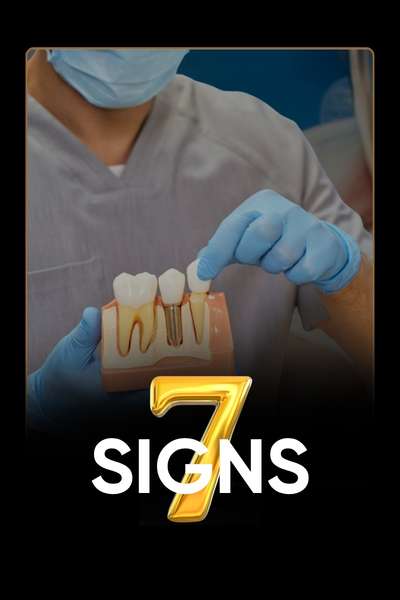
This guide outlines seven clear signs that point toward implant candidacy, so you can walk into your first consultation at a dental implant clinic in Bangalore already knowing where you stand.
This is the most obvious starting point. Whether you lost a tooth to decay, gum disease, trauma, or a failed root canal, a gap in your smile is the primary reason patients explore tooth replacement in Bangalore.
What many patients do not realise is that the moment a tooth is lost, the jawbone beneath it begins to resorb. Every month of delay reduces the bone volume available for implant placement. If you have a missing tooth, regardless of how long it has been gone, a consultation with a qualified implantologist in Bangalore is the right next step before the situation becomes more complex.
A single tooth implant placed promptly after extraction not only fills the gap but actively preserves the bone and prevents adjacent teeth from drifting out of position.
Dentures and bridges are common tooth replacement solutions, but they come with limitations that implants do not.
Dentures can slip during eating or speaking, require adhesives, need periodic relining as bone changes shape underneath them, and do nothing to prevent ongoing bone resorption. Bridges, while fixed, require grinding down healthy adjacent teeth and typically need replacement after ten to fifteen years.
If you are wearing a denture or bridge and find yourself restricted in what you eat, self-conscious about stability, or frustrated by ongoing maintenance, you are a strong candidate for implant-supported replacement. The dental bridge vs implant comparison covers this in detail and helps patients weigh both options with full clinical context.
Dental implants are anchored directly into the jawbone. For this to work, there needs to be sufficient bone height, width, and density at the implant site to support the titanium post during and after osseointegration.
A CBCT scan taken during your consultation gives your implantologist a precise three-dimensional picture of available bone. Many patients who assume they do not have enough bone are surprised to find they have more than they expected. Conversely, patients who have waited years to replace a missing tooth may have experienced more resorption than anticipated.
The important point is that insufficient bone does not automatically rule out implants. Bone grafting procedures can rebuild lost volume before or at the time of implant placement, restoring the foundation needed for a successful outcome.
Healthy gum tissue is essential for implant success. Active gum disease, clinically known as periodontitis, creates a bacterial environment that can compromise osseointegration and lead to peri-implantitis, an infection around the implant that is one of the leading causes of implant failure.
Before proceeding with implant placement, any existing gum disease must be diagnosed and treated. This is not a barrier to implants but a precondition. Patients with a history of gum disease who have received treatment and maintained good oral hygiene can still be excellent implant candidates.
If you are unsure about the condition of your gums, a periodontal assessment is part of the standard pre-implant consultation at a dental implant clinic in Rajajinagar.
Dental implant surgery is a minor surgical procedure carried out under local anaesthesia. Like any surgical intervention, general health plays a role in healing and outcome.
Patients with well-controlled systemic conditions such as hypertension or managed diabetes can successfully receive implants. However, certain conditions and medications do affect candidacy and require specific assessment:
A thorough medical history review at your first consultation allows your implantologist in Bangalore to identify any factors that need to be addressed before treatment begins.
Smoking is one of the most significant modifiable risk factors for implant failure. Nicotine reduces blood flow to the gum tissue and bone, impairs the immune response, and significantly increases the risk of infection and poor osseointegration.
Studies consistently show that implant failure rates in smokers are two to three times higher than in non-smokers. Most implantologists recommend stopping smoking at least two weeks before implant placement and refraining throughout the healing period of three to six months.
Patients who smoke but are committed to quitting, even temporarily, substantially improve their chances of a successful long-term outcome. This is a conversation worth having honestly with your dental implant specialist in Bangalore during the planning stage.
Dental implants do not decay the way natural teeth do, but they are not maintenance-free. The gum and bone tissue surrounding an implant require consistent care to remain healthy. Plaque accumulation around an implant can lead to peri-implantitis, a condition that, if left untreated, causes bone loss and can eventually lead to implant failure.
Good candidacy for implants includes a genuine commitment to:
Patients who already maintain good oral hygiene routines are the strongest long-term candidates for implants. Those who are working on improving their habits can still qualify, provided they demonstrate consistency before treatment begins.
Not meeting one or two of these criteria does not close the door on dental implants in Bangalore. Many of the factors above are addressable:
The goal of a pre-implant consultation at DeVita Dental and Maxillofacial Care in Rajajinagar is not to disqualify patients but to identify the correct treatment sequence that gives every patient the best possible chance of a successful, lasting outcome.
For patients who have lost multiple teeth or are evaluating full arch replacement, the single tooth implant vs full mouth dental implants guide helps clarify which solution aligns with your specific situation before your consultation.
DeVita Dental and Maxillo Facial Care is a multispeciality dental clinic in Mahalakshmi Layout, Rajajinagar, Bangalore, located on the 1st floor of 17/A, 20th Main Road, next to Mahalakshmi Metro Station. The clinic offers comprehensive dental and maxillofacial treatments under one roof, managed by qualified specialists committed to precise, patient-centred care.
Address: 1st floor, 17/A, 20th Main Rd, next to Mahalakshmi metro station, 1st R Block, Chord road, Rajajinagar, Bengaluru, Karnataka 560010 Get directions →
Phone: 091106 55755
WhatsApp: Chat on WhatsApp
Working Hours: Monday to Saturday: 10:00 am – 8:00 pm
Sunday: 10:30 am – 4:30 pm
Follow Us: Facebook | Instagram
Dr. S. S. Shreyas, BDS, MDS, is an Oral & Maxillofacial and Reconstructive Surgeon, Implantologist, and Co-Founder & CEO of DeVita Dental & Maxillo Facial Care, Rajajinagar, Bangalore. With over 8+ years of clinical experience, he specializes in single-tooth implants, full-mouth dental implants, immediate loading implants, bone grafting, and full mouth rehabilitation. He follows a patient-first approach, combining advanced implant techniques with personalized treatment planning to restore healthy, functional, and natural-looking smiles.
Dr. Tarika Gopal, BDS, MDS, is an Orthodontist, Dentofacial Orthopedist, Specialist in Dental Sleep Medicine, and Co-Founder & Clinical Director of DeVita Dental & Maxillo Facial Care Rajajinagar Bangalore. With over 8+ years of clinical experience, she specializes in clear aligners, Invisalign treatment, children and adult orthodontics, non-extraction smile correction, TMD management, and personalized orthodontic care using advanced treatment planning.
Dental implants in Bangalore are a proven, permanent solution for missing teeth, but the right outcome begins with the right candidacy assessment. If you recognise yourself in the seven signs above, you are likely a strong candidate. If some factors need to be addressed first, a qualified implantologist in Bangalore will map out the correct sequence to get you there. DeVita Dental and Maxillofacial Care in Rajajinagar offers thorough pre-implant assessments, honest treatment planning, and specialist-level implant care for patients across Bangalore, including Basaveshwaranagar, Malleshwaram, Vijayanagar, Yeshwanthpur, and Nandini Layout. Book a consultation to find out exactly where you stand.
The only reliable way to confirm candidacy is through a clinical examination and CBCT scan at a dental implant clinic in Bangalore. The scan gives your implantologist a precise view of bone volume, density, and the position of adjacent structures, which together determine whether implant placement is immediately possible or requires preparatory treatment first.
Age alone is not a disqualifying factor. Implants are successfully placed in patients in their seventies and eighties, provided bone density is adequate and general health supports the minor surgical procedure. The key factors are biological, not chronological.
For a single tooth implant in Bangalore, the process typically takes three to five months from placement to final crown, accounting for the osseointegration period. Cases requiring bone grafting add time to this timeline. Your implantologist will give you a personalised timeline during the treatment planning appointment.
Not always. Many patients have sufficient bone volume for direct implant placement. Grafting is required when bone loss has occurred due to prolonged tooth absence, gum disease, or previous infections. A CBCT scan at a dental implant clinic in Rajajinagar determines this before any treatment begins.
Patients with well-controlled diabetes can successfully receive dental implants. Uncontrolled blood sugar levels impair healing and increase infection risk, which is why glycaemic management is assessed and optimised before implant surgery. Your implantologist will coordinate with your physician if needed.
Every month after tooth loss, the jawbone at the extraction site continues to resorb. This reduces the bone volume available for implant placement and may eventually necessitate bone grafting, adding cost and time to treatment. Early consultation with a tooth replacement specialist in Bangalore significantly simplifies the implant process.
Yes. DeVita Dental and Maxillofacial Care in Rajajinagar is centrally located and easily accessible from Malleshwaram, Basaveshwaranagar, Vijayanagar, Yeshwanthpur, and Nandini Layout. Many patients across West Bangalore choose the clinic for implant treatment because of the in-house implantologist and comprehensive pre-implant assessment process.