Menu
Missing teeth are more than just a cosmetic concern. They can affect your ability to chew properly, alter speech, cause shifting of adjacent teeth, and even lead to jawbone loss over time. Fortunately, modern dentistry offers reliable solutions to replace missing teeth—dental bridges and dental implants being the most common.
Patients often ask: Which option is better-dental bridge or dental implant?
The answer depends on oral health, bone condition, long-term goals, and personal preferences.
This blog provides a clear, professional comparison of dental bridges vs implants, helping you make an informed decision about the best tooth replacement option for your smile and oral health.
When a tooth is lost due to decay, trauma, or gum disease, the surrounding teeth and jawbone begin to change. Delaying replacement can lead to:
Early tooth replacement helps preserve facial structure, oral function, and long-term dental health.
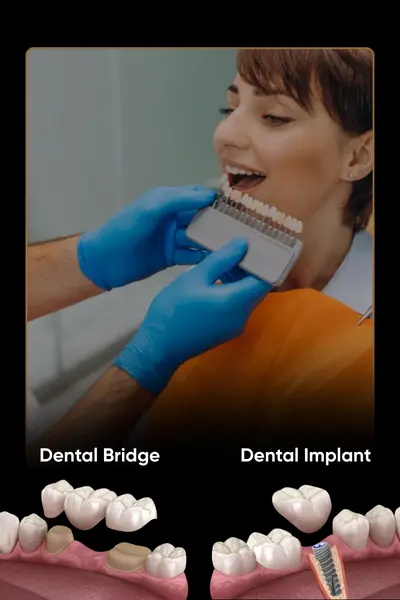
A dental bridge replaces a missing tooth by anchoring an artificial tooth (pontic) to the neighboring natural teeth, known as abutment teeth. These adjacent teeth are reshaped and capped with dental crowns to support the bridge.
Dental bridges have been used successfully for decades and remain a practical solution in certain cases.
A dental implant is a titanium post surgically placed into the jawbone, acting as an artificial tooth root. Once the implant integrates with the bone, a crown is placed on top to restore function and appearance.
Dental implants are considered the gold standard in tooth replacement due to their durability and natural feel.
| Factor | Dental Bridge | Dental Implant |
|---|---|---|
| Longevity | 7–10 years (average) | 15–25+ years |
| Bone Preservation | ❌ No | ✅ Yes |
| Impact on Adjacent Teeth | Requires trimming | No impact |
| Procedure | Non-surgical | Surgical |
| Aesthetics | Good | Excellent, natural |
| Maintenance | Higher | Similar to natural tooth |
There is no one-size-fits-all answer. The better option depends on your clinical condition and long-term goals.
A thorough dental evaluation, including digital scans and imaging, is essential to determine the most suitable option.
One major difference between bridges and implants is bone preservation. When a tooth is lost, the jawbone begins to resorb due to lack of stimulation. Dental implants mimic natural tooth roots, maintaining bone density and facial structure.
Bridges, while effective, do not address bone loss—making implants the preferred choice for long-term oral health whenever possible.
Both options require good oral hygiene to ensure longevity:
Dental implants do not decay, but the surrounding gums must remain healthy. Bridges require careful cleaning under the pontic to prevent plaque accumulation.
At DeVita Dental and Maxillo Facial Care, we offer advanced, patient-focused solutions for missing teeth, including dental implants, crowns, and bridges, backed by clinical precision and premium care standards.
Our specialists evaluate bone health, bite alignment, aesthetics, and long-term outcomes before recommending the best tooth replacement option tailored to your needs.
📍 Clinic Address
1st floor, 17/A, 20th Main Rd, next to Mahalakshmi metro station, 1st R Block, Chord road, 2nd Stage, Rajajinagar, Bengaluru, Karnataka 560010
📞 Call Us
+91 91106 55755
Tooth replacement often integrates with other treatments such as:
This integrated approach ensures predictable, long-lasting results.
Both dental bridges and implants are effective tooth replacement solutions when chosen correctly. While bridges offer a quicker and cost-effective option in select cases, dental implants provide superior longevity, bone preservation, and natural function.
The best choice depends on your oral health, lifestyle, and expectations. Consulting an experienced dental team ensures you receive a solution that not only restores your smile but also protects your oral health for years to come.
The main difference is that a dental bridge relies on adjacent teeth for support, while a dental implant is placed directly into the jawbone, replacing the tooth root. Implants preserve bone health, whereas bridges do not.
Dental implants generally last much longer than bridges. With proper care, implants can last 15 to 25 years or more, while dental bridges typically last around 7 to 10 years.
A dental implant is often considered the better long-term solution because it does not affect neighboring teeth, preserves jawbone, and offers a more natural look and function. However, bridges may be suitable in certain clinical situations.
Dental implant procedures are usually painless, as they are performed under local anesthesia or sedation. Most patients report minimal discomfort during recovery, which can be managed with medication.
Most adults can get dental implants, but adequate jawbone and healthy gums are required. Patients with bone loss may need additional procedures such as bone grafting before implant placement.
Dental bridges are a reliable option when adjacent teeth already require crowns or when implants are not suitable due to bone limitations, medical conditions, or time constraints.
Dental implant treatment usually takes a few months, as it involves healing time for the implant to integrate with the jawbone. Some cases may allow same-day implant placement depending on bone quality and clinical conditions.
Dental implants typically look and feel more natural because they closely mimic natural tooth structure and emerge from the gum like a real tooth.
Dental bridges usually have a lower upfront cost, while dental implants involve a higher initial investment. However, implants may be more cost-effective in the long run due to their longevity.
You can get advanced dental implants and high-quality dental bridges at DeVita Dental and Maxillo Facial Care Mahalakshmi Layout Rajajinagar, where experienced specialists use digital diagnostics and precision-driven techniques for predictable, long-lasting results.