Menu
Immediate Dental Implant in Bangalore are one of the most frequently asked about topics at implant consultations, and understandably so. The idea of having a tooth removed and an implant placed in the same appointment is appealing. It reduces the number of surgical visits, shortens the overall treatment timeline, and in many cases allows a temporary crown to be fitted the same day.
But immediate implant placement is not suitable for every patient or every extraction site. Whether you qualify depends on a specific set of clinical conditions that your implantologist assesses before making any recommendation.
This guide explains exactly what immediate implants involve, who is a suitable candidate, what the process looks like, and what to expect in terms of outcomes and timelines.
A conventional dental implant follows a staged protocol. The tooth is extracted, the socket is left to heal for eight to twelve weeks, and the implant is placed into the healed bone at a separate surgical appointment. This remains the most widely used approach and delivers highly predictable results.
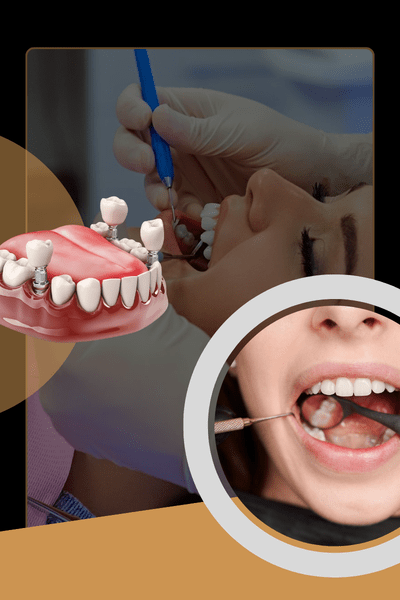
An immediate implant, by contrast, is placed into the extraction socket at the same appointment as the tooth removal. The implant occupies the space left by the tooth root, and in selected cases, a temporary crown is attached the same day so the patient leaves with a functional, aesthetic replacement already in place.
This approach, when performed by a qualified implantologist in Bangalore on the right candidate, delivers excellent long-term outcomes with a significantly compressed treatment timeline.
The surgical principles are the same. A titanium implant post is placed into the jawbone to serve as an artificial tooth root, and osseointegration, the process by which bone fuses with the implant surface, occurs over the following weeks and months.
The key difference is timing and the clinical demands it places on the procedure.
In a freshly extracted socket, the bone walls are intact but the socket shape does not perfectly match the implant dimensions. The implantologist must achieve primary stability, a firm, immediate mechanical hold of the implant in the bone, without relying on the socket shape alone. This requires careful assessment of available bone beyond the socket base, precise implant selection, and surgical technique that goes beyond standard implant placement.
When primary stability is achieved, the implant can begin osseointegrating immediately. When it is not achievable, the conventional staged approach is safer and more appropriate.
Not every tooth extraction site is suitable for immediate implant placement. Your implantologist in Bangalore will assess the following before recommending this approach:
Intact socket walls: The bone surrounding the extraction socket must be largely intact. If the tooth being removed has caused significant bone destruction through infection, cyst, or advanced decay, the socket walls may be too compromised to provide adequate implant stability.
Absence of active infection: Acute dental infections at the extraction site are a contraindication for immediate implant placement. Active infection introduces bacteria into the implant site, significantly increasing the risk of implant failure. In these cases, the infection is treated first, the extraction is performed, and the implant is placed once the site has healed.
Adequate bone beyond the socket apex: The implant needs to engage solid bone below and around the extraction socket to achieve the primary stability required for immediate placement. CBCT imaging taken before the procedure confirms whether this bone is available.
Good general health and oral hygiene: The same general candidacy factors that apply to conventional implants apply here. Well-controlled systemic health, non-smoking status or willingness to abstain during healing, and a demonstrated commitment to oral hygiene all influence the suitability and success of immediate placement.
Favourable tooth and socket anatomy: Single-rooted teeth in the front and premolar regions tend to be more suitable for immediate implant placement than multi-rooted molars, where the socket anatomy is more complex and primary stability is harder to achieve predictably.
For patients who qualify, the process at DeVita Dental and Maxillofacial Care follows a structured, carefully planned sequence.
Pre-Surgical Assessment
A CBCT scan is taken before any extraction to assess bone volume, socket anatomy, and the position of adjacent anatomical structures. The implantologist uses this three-dimensional data to select the correct implant dimensions and plan the precise placement angle and depth before entering the surgical phase.
This planning step is non-negotiable. Immediate implant placement without prior CBCT assessment significantly increases the risk of malposition, inadequate primary stability, and long-term complications.
Tooth Extraction
The tooth is removed as atraumatically as possible, using techniques designed to preserve the surrounding bone walls. Minimal trauma during extraction is particularly important for immediate implant cases because even small amounts of additional bone loss at the socket rim can affect the final aesthetic outcome, especially in the front teeth.
Implant Placement
The implant is placed into the extraction socket immediately following removal, engaging the bone at the socket base and walls to achieve primary stability. Any gap between the implant surface and the socket walls is filled with a bone graft material to encourage bone regeneration around the implant.
Temporary Crown (Where Appropriate)
In cases where primary stability is confirmed and the bite allows it, a temporary crown is attached to the implant the same day. This is referred to as immediate loading. The temporary crown is designed to be out of direct bite contact, protecting the implant during the osseointegration period while maintaining aesthetics and basic function.
Not every immediate implant case is suitable for same-day loading. In some cases, the implant is left unloaded beneath the gum line to integrate undisturbed, and the permanent crown is placed after osseointegration is confirmed at a follow-up appointment.
Healing and Osseointegration
Regardless of whether a temporary crown is placed, osseointegration takes eight to twelve weeks. During this period, patients are advised to avoid hard or crunchy foods at the implant site, maintain meticulous oral hygiene, and attend scheduled review appointments.
Final Crown Placement
Once osseointegration is confirmed, the permanent ceramic crown is placed and adjusted for correct bite alignment. At this stage the treatment is complete and the implant functions exactly like a natural tooth.
Neither approach is universally superior. The right protocol depends entirely on the clinical situation.
Factor | Immediate Implant | Conventional Implant |
Number of surgical visits | One (extraction and implant combined) | Two (extraction, then implant) |
Overall treatment timeline | Shorter by eight to twelve weeks | Longer due to healing phase |
Bone grafting | Usually required at socket gaps | May or may not be required |
Candidacy | Selective, requires ideal conditions | Broader, suits most extraction sites |
Same-day temporary tooth | Possible in suitable cases | Not applicable at implant placement |
Long-term success rates | Comparable when correctly selected | Well-established and predictable |
For patients who have a failing tooth that needs extraction and want to minimise the number of surgical appointments, immediate implant placement is worth discussing with a qualified implantologist in Bangalore. For patients with infection, significant bone loss, or complex socket anatomy, the conventional staged approach delivers a more predictable outcome.
One of the most important things patients can do before a tooth extraction in Rajajinagar is discuss implant options at the same consultation. Many patients have extractions performed without any discussion of replacement, and then return months or years later wanting an implant, by which time significant bone resorption has already occurred.
Having the implant conversation before or at the extraction appointment means your clinician can assess whether immediate placement is appropriate, or if not, can plan the extraction in a way that maximises bone preservation for future implant placement.
The dental implants guide at DeVita Dental covers the full implant process in detail, and the single tooth implant cost guide for Bangalore provides transparent cost reference points for patients planning ahead.
For patients who have already had an extraction and are now evaluating replacement options, the dental bridge vs implant comparison helps clarify which solution is the stronger long-term investment.
Immediate implant placement is technically more demanding than conventional implant surgery. The variability of extraction socket anatomy, the requirement for precise primary stability assessment, and the decision-making involved in whether to load the implant the same day all require a level of clinical experience and judgment that goes beyond basic implant training.
Patients seeking immediate dental implants in Bangalore should confirm that their treating clinician is a qualified implantologist, not a general dentist who places implants occasionally. The difference in outcome between an experienced specialist and an occasional implant placer is significant, particularly in immediate placement cases where the margin for error is smaller.
At DeVita Dental and Maxillofacial Care in Rajajinagar, immediate implant cases are assessed and managed by a resident implantologist supported by in-house maxillofacial expertise for cases requiring bone grafting or complex surgical preparation. Patients from Basaveshwaranagar, Malleshwaram, Vijayanagar, Yeshwanthpur, Nandini Layout, and across West Bangalore visit the clinic for both routine and complex implant cases.
DeVita Dental and Maxillo Facial Care is a multispeciality dental clinic in Mahalakshmi Layout, Rajajinagar, Bangalore, located on the 1st floor of 17/A, 20th Main Road, next to Mahalakshmi Metro Station. The clinic offers comprehensive dental and maxillofacial treatments under one roof, managed by qualified specialists committed to precise, patient-centred care.
Address: 1st floor, 17/A, 20th Main Rd, next to Mahalakshmi metro station, 1st R Block, Chord road, Rajajinagar, Bengaluru, Karnataka 560010 Get directions →
Phone: 091106 55755 WhatsApp: Chat on WhatsApp
Working Hours: Monday to Saturday: 10:00 am – 8:00 pm Sunday: 10:30 am – 4:30 pm
Follow Us: Facebook | Instagram
What Our Patients Say
“From the very first consultation, Dr. Shreyas took the time to explain everything in detail, which put me completely at ease. The procedure itself was carried out flawlessly by the specialist, with great attention to comfort and precision. Quality dental care under specialist supervision is truly essential, and Devita delivers it exceptionally well.” — Murali Pani, Google Review
Dr. S. S. Shreyas, BDS, MDS, is an Oral & Maxillofacial and Reconstructive Surgeon, Implantologist, and Co-Founder & CEO of DeVita Dental & Maxillo Facial Care, Rajajinagar, Bangalore. With over 8+ years of clinical experience, he specializes in single-tooth implants, full-mouth dental implants, immediate loading implants, bone grafting, and full mouth rehabilitation. He follows a patient-first approach, combining advanced implant techniques with personalized treatment planning to restore healthy, functional, and natural-looking smiles.
Dr. Tarika Gopal, BDS, MDS, is an Orthodontist, Dentofacial Orthopedist, Specialist in Dental Sleep Medicine, and Co-Founder & Clinical Director of DeVita Dental & Maxillo Facial Care Rajajinagar Bangalore. With over 8+ years of clinical experience, she specializes in clear aligners, Invisalign treatment, children and adult orthodontics, non-extraction smile correction, TMD management, and personalized orthodontic care using advanced treatment planning.
Immediate dental implants in Bangalore are a clinically proven option for the right patient and the right extraction site. When the conditions are met, they offer a shorter treatment timeline, fewer surgical appointments, and in suitable cases a temporary tooth the same day as extraction. When the conditions are not met, a conventional staged approach delivers a more reliable outcome. The key is an honest, thorough pre-surgical assessment by a qualified implantologist in Bangalore who prioritises your long-term result over a compressed timeline. DeVita Dental and Maxillofacial Care in Rajajinagar offers exactly this, with CBCT-guided planning, resident implantologist expertise, and a transparent process that puts clinical accuracy first. Book a consultation to find out whether immediate implant placement is the right option for your specific case.
Yes, when performed on correctly selected candidates by a qualified implantologist using CBCT-guided planning, immediate implant placement has success rates comparable to conventional staged implants. Patient selection and surgical precision are the critical factors. Cases with active infection, significant bone loss, or unfavourable socket anatomy are not suitable for immediate placement and are managed with a staged protocol instead.
A CBCT scan taken before your extraction appointment is the most reliable way to assess suitability. It gives your implantologist a precise three-dimensional view of available bone, socket anatomy, and the proximity of adjacent structures. This assessment is carried out at the pre-surgical consultation at DeVita Dental before any treatment decision is made.
In selected cases, yes. Immediate loading, where a temporary crown is placed the same day as implant placement, is possible when the implant achieves strong primary stability and the bite allows the temporary crown to remain out of direct contact. Not every immediate implant case qualifies for same-day loading, and your implantologist will advise based on your specific situation.
Osseointegration takes eight to twelve weeks regardless of whether the implant was placed immediately after extraction or in a healed site. During this period the titanium surface bonds with the surrounding bone. The permanent crown is placed after osseointegration is confirmed at a follow-up review appointment.
Active infection at the extraction site is a contraindication for immediate implant placement. The infection is treated first, the tooth is extracted, and a healing period is observed before implant placement. Placing an implant into an infected site significantly increases the risk of implant failure. Your implantologist in Bangalore will assess the site condition and recommend the correct sequence for your case.
In most immediate implant cases, some bone graft material is placed to fill the gap between the implant surface and the socket walls. This gap exists because the implant shape does not perfectly match the extraction socket. The graft material supports bone regeneration around the implant during healing. Whether a larger grafting procedure is also needed depends on the available bone volume at the site.
For a suitable immediate implant case, the timeline from extraction and implant placement to final crown is typically three to four months, compared to five to seven months for a conventional staged approach. The compression in timeline comes from eliminating the separate healing phase between extraction and implant placement. Your implantologist will give you a personalised timeline at the consultation appointment.